
Our products
NEWS
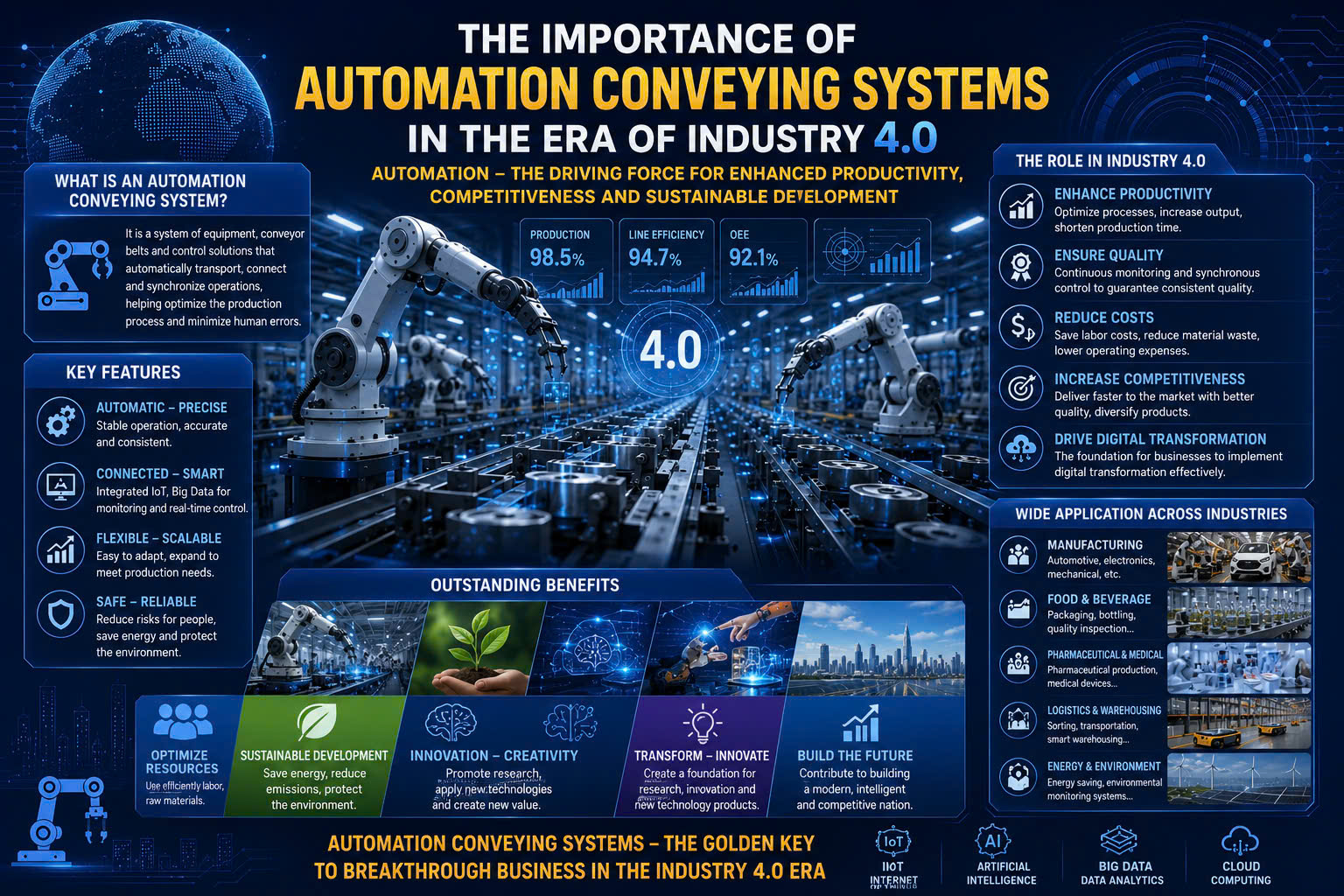
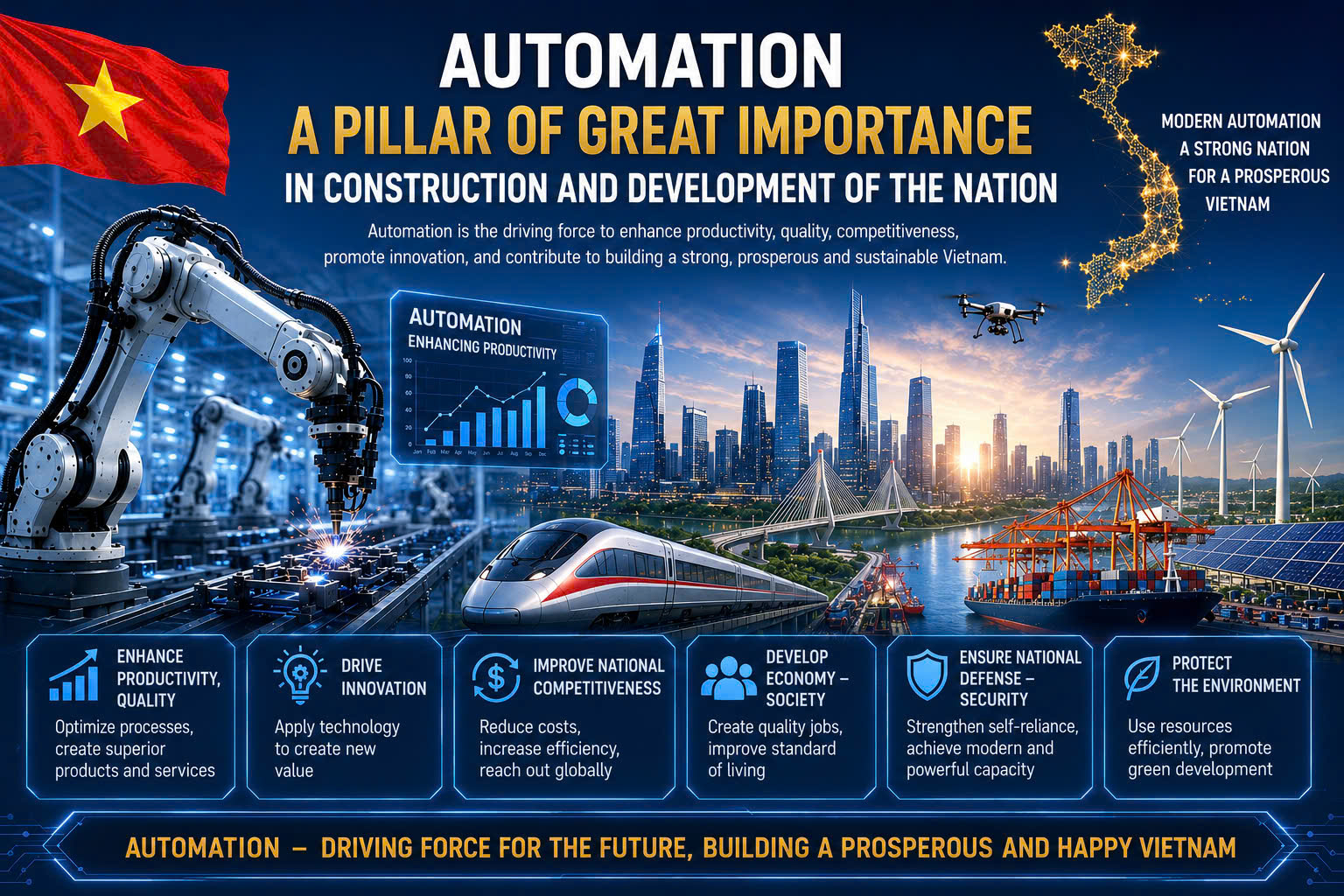
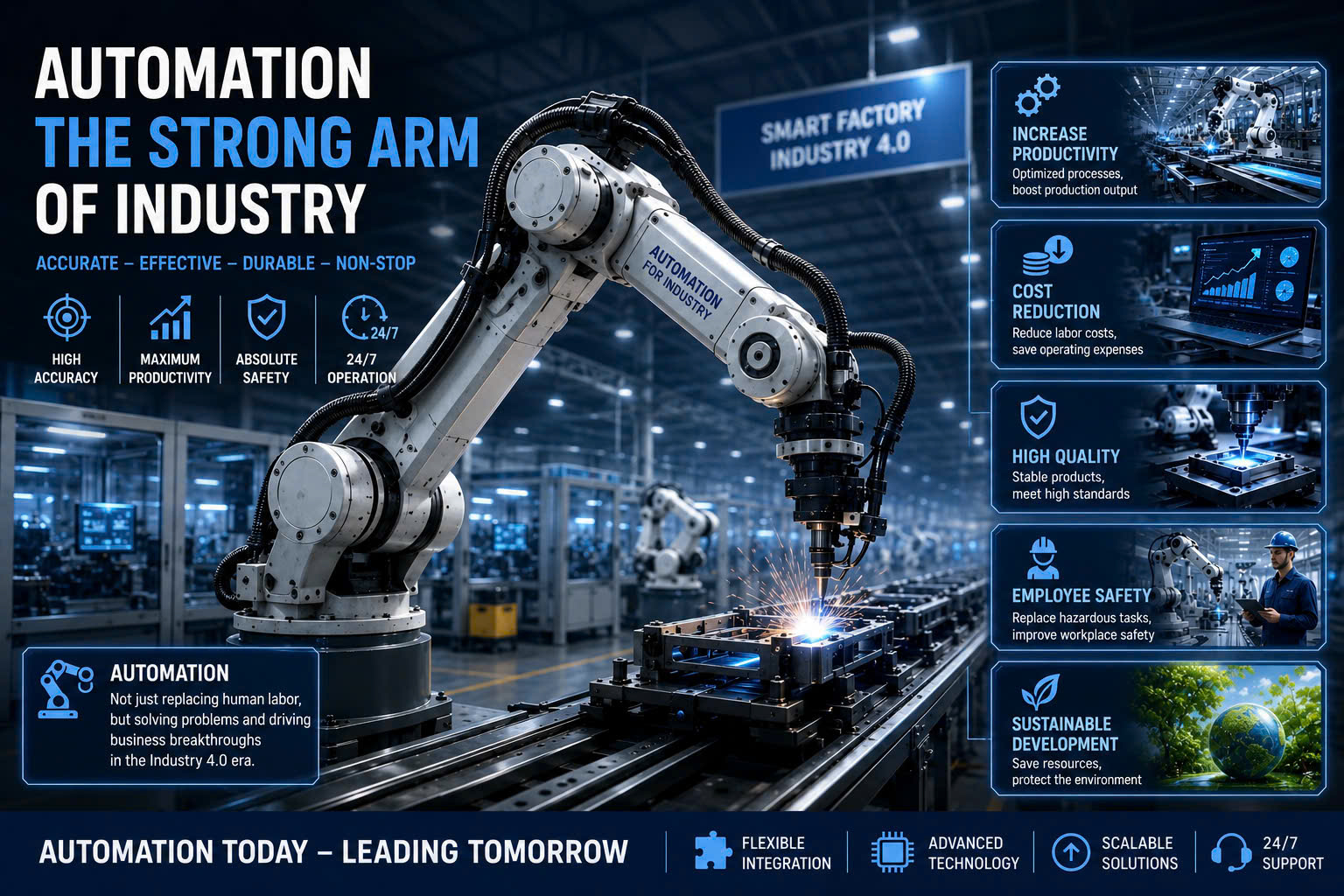
Automation Reinforces Its Vital Role in National Industrial Development
Automation Reinforces Its Vital Role in National Industrial Development
In the era of industrialization and modernization, industrial automation—the backbone of modern manufacturing— plays a crucial role in driving the development of other economic sectors. It creates new employment opportunities, improves industrial productivity, and strengthens a nation's global competitiveness.
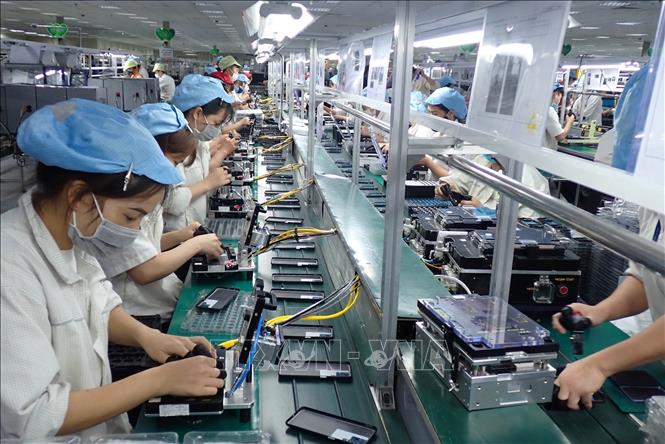
Industrial automation refers to the application of advanced technologies—including programmable logic controllers (PLCs), industrial computers, robotic arms, sensors, and Artificial Intelligence (AI)—to manufacturing processes. Its primary objective is to automate or assist repetitive, labor-intensive, and hazardous operations, enabling factories to operate more efficiently, safely, and intelligently.
⚙️ The Four Levels of Industrial Automation
A modern factory automation system is typically structured into four core levels:
1. Field Device Level (Execution Layer)
This level consists of the physical components directly involved in production, including sensors, pneumatic cylinders, servo motors, permanent magnets (such as NdFeB magnets), and custom jigs and fixtures used for workpiece positioning.
2. Control Level
Often considered the "brain" of the production line, this level is centered around the Programmable Logic Controller (PLC). The PLC receives signals from sensors and executes control commands to ensure machines operate according to predefined production processes.
3. Supervisory Level (SCADA/HMI)
Human-Machine Interface (HMI) panels and SCADA systems allow engineers to monitor, control, and troubleshoot the entire production line in real time, improving operational visibility and responsiveness.
4. Management Level (MES/ERP)
At the highest level, Manufacturing Execution Systems (MES) and Enterprise Resource Planning (ERP) software integrate production planning, inventory management, and factory operations, forming the foundation of a Smart Factory.
🚀 Five Key Benefits of Industrial Automation
Significant Productivity Improvement
Industrial robots and automated machines can operate continuously 24/7 without interruption, delivering production speeds far beyond manual operations.
Consistent Product Quality
Automation eliminates variations caused by human fatigue or inconsistency, ensuring every product is manufactured according to precise engineering specifications.
Lower Operating Costs
High-precision automation reduces labor costs, minimizes material waste and defective products, and improves overall production efficiency.
Enhanced Workplace Safety
Automation performs dangerous tasks in high-temperature, chemically hazardous, or physically demanding environments, protecting workers from occupational risks.
Flexible Manufacturing
Modern modular automation systems can be quickly reprogrammed to manufacture new products, allowing manufacturers to respond rapidly to changing market demands without extensive equipment replacement.
🔮 The Next Generation of Automation: Industry 4.0
Industrial automation is rapidly evolving from conventional automated production lines toward intelligent manufacturing systems.
Collaborative Robots (Cobots)
Compact and safe collaborative robots are designed to work alongside human operators without the need for protective fencing, increasing both flexibility and productivity.
Automated Material Feeding Systems
Custom feeding mechanisms, long-part feeding fixtures (such as 4.5–5-meter VA/VB feeding systems), and intelligent conveyor systems enable continuous loading of workpieces into CNC machines, reducing downtime and improving production efficiency.
Artificial Intelligence & Machine Vision
AI-powered machine vision systems serve as the "eyes" of smart factories. Intelligent cameras automatically inspect microscopic surface defects, perform quality control, and guide industrial robots in material handling and assembly with exceptional accuracy.
As Industry 4.0 continues to reshape global manufacturing, automation has become far more than a productivity tool. It is now a strategic driver of innovation, operational excellence, sustainable growth, and international competitiveness. Companies that embrace intelligent automation today are better positioned to lead the factories of tomorrow.

