
Our products
NEWS
The Importance of Automated Production Lines in the Industry 4.0 Era
The Importance of Automated Production Lines in the Industry 4.0 Era
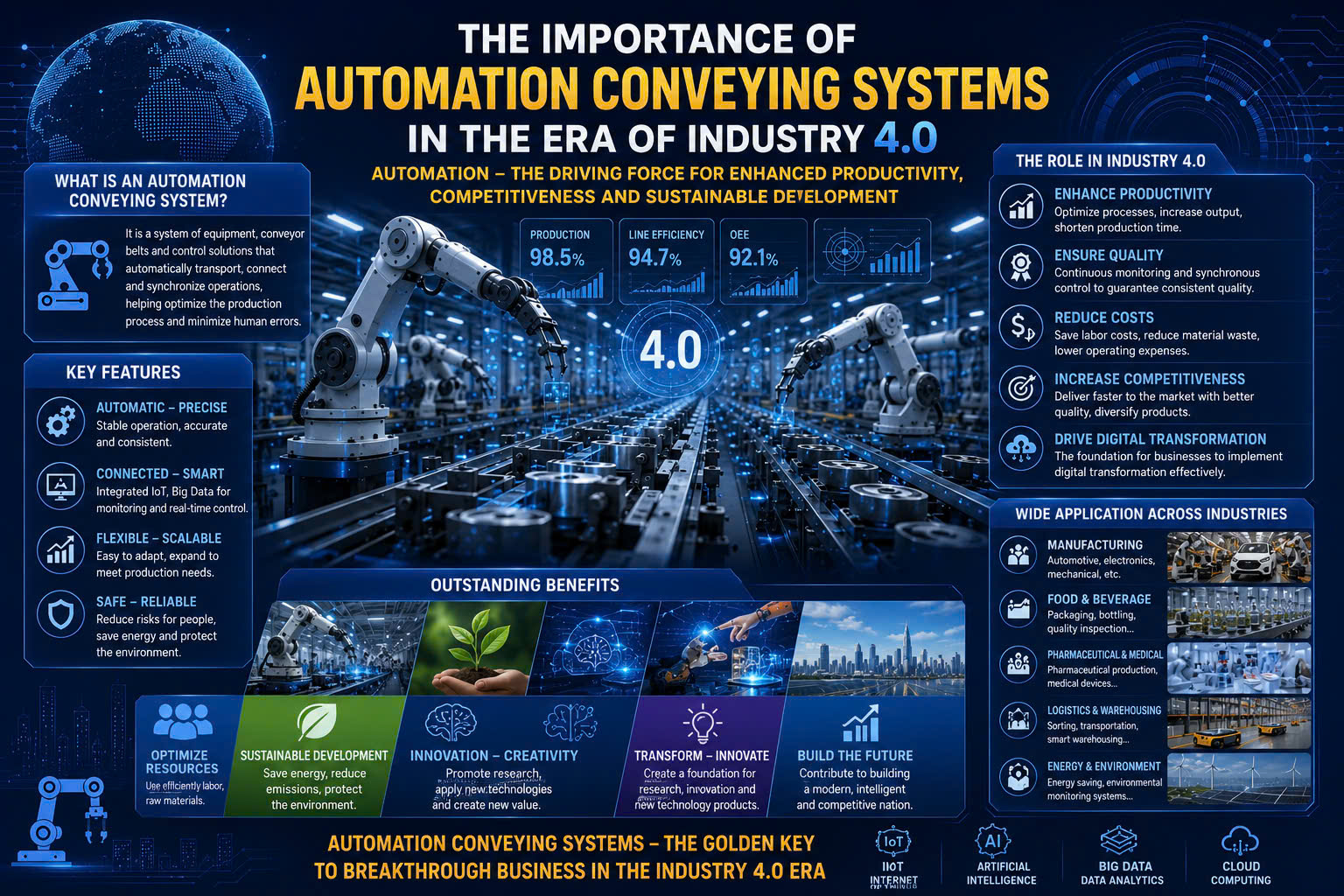
In the Industry 4.0 era, automated production lines have become an essential component of modern manufacturing. Supported by intelligent control, monitoring, and management platforms, automation enables manufacturers to improve productivity, ensure product quality, and respond more quickly to changing market demands.
What Is an Automated Production Line?
An automated production line is an integrated manufacturing system in which multiple machines, industrial robots, conveyors, sensors, and control systems work together to perform production processes with minimal human intervention.
Unlike traditional manufacturing, where operators manually perform most production tasks, automated production lines rely on intelligent systems to execute repetitive operations with high precision. Human involvement is primarily focused on system design, programming, operation, monitoring, and process optimization through digital platforms.
As a result, investing in automation has become a strategic step for manufacturers seeking to modernize production, increase efficiency, and improve long-term profitability.
Why Automated Production Lines Matter in the Industry 4.0 Era
In the age of Industry 4.0, automation is no longer simply an upgrade—it has become a critical factor in maintaining manufacturing competitiveness. The Fourth Industrial Revolution combines physical manufacturing systems with digital technologies such as the Internet of Things (IoT), Big Data, Artificial Intelligence (AI), and cloud computing, transforming conventional production lines into intelligent manufacturing systems.
The following are the key advantages of automated production lines in modern industry.
1. 🏭 Enabling the Smart Factory
Fully Connected Manufacturing
Every component on the production line—from sensors and robotic arms to automated feeding fixtures and conveyors—is connected to a centralized control system, enabling seamless communication across the factory.
Intelligent Decision-Making
Unlike traditional automation that follows fixed programming, Industry 4.0 production lines continuously collect operational data, analyze system performance, and automatically adjust production parameters to maximize efficiency with minimal human intervention.
2. 🔮 From Reactive Maintenance to Predictive Maintenance
Smart IoT Sensors
Industrial IoT sensors continuously monitor machine temperature, vibration, pressure, current, and other operating conditions.
Minimizing Downtime
Artificial Intelligence analyzes these data in real time to predict potential equipment failures—such as worn bearings or leaking pneumatic cylinders—before breakdowns occur. Manufacturers can schedule maintenance during planned downtime, significantly reducing unexpected machine stoppages and improving Overall Equipment Effectiveness (OEE).
3. 🎯 Supporting Mass Customization
Flexible Manufacturing
Today's customers expect greater product variety and shorter product life cycles. Modern automated production lines feature modular architectures and collaborative robots (Cobots), allowing manufacturers to adapt quickly to changing production requirements.
Rapid Product Changeover
Instead of rebuilding mechanical systems, manufacturers can switch from producing Product A to Product B simply by updating software parameters or production recipes, dramatically reducing setup time and increasing manufacturing flexibility.
4. 📈 Optimizing Supply Chain and Resource Management
Integrated Data Flow
Automation systems can be directly integrated with Warehouse Management Systems (WMS) and Enterprise Resource Planning (ERP) platforms, enabling seamless data exchange throughout the factory.
Just-in-Time (JIT) Manufacturing
When raw materials or components—such as stainless steel bars, magnets, or mechanical parts—reach predefined inventory levels, the automation system can automatically trigger replenishment requests or purchase orders. This reduces excess inventory, optimizes cash flow, and improves supply chain efficiency.
5. 🛡️ Improving Workplace Safety and Addressing Labor Shortages
Replacing Hazardous Manual Tasks
Automated systems perform dangerous, repetitive, and physically demanding operations, including heavy material handling, continuous workpiece feeding along long production lines, and operation in hazardous environments.
Creating Higher-Value Roles
Automation enables employees to transition from repetitive manual labor to higher-value positions such as automation engineers, robotics specialists, production data analysts, and process optimization experts, contributing to a more skilled and future-ready workforce.
Driving the Future of Manufacturing
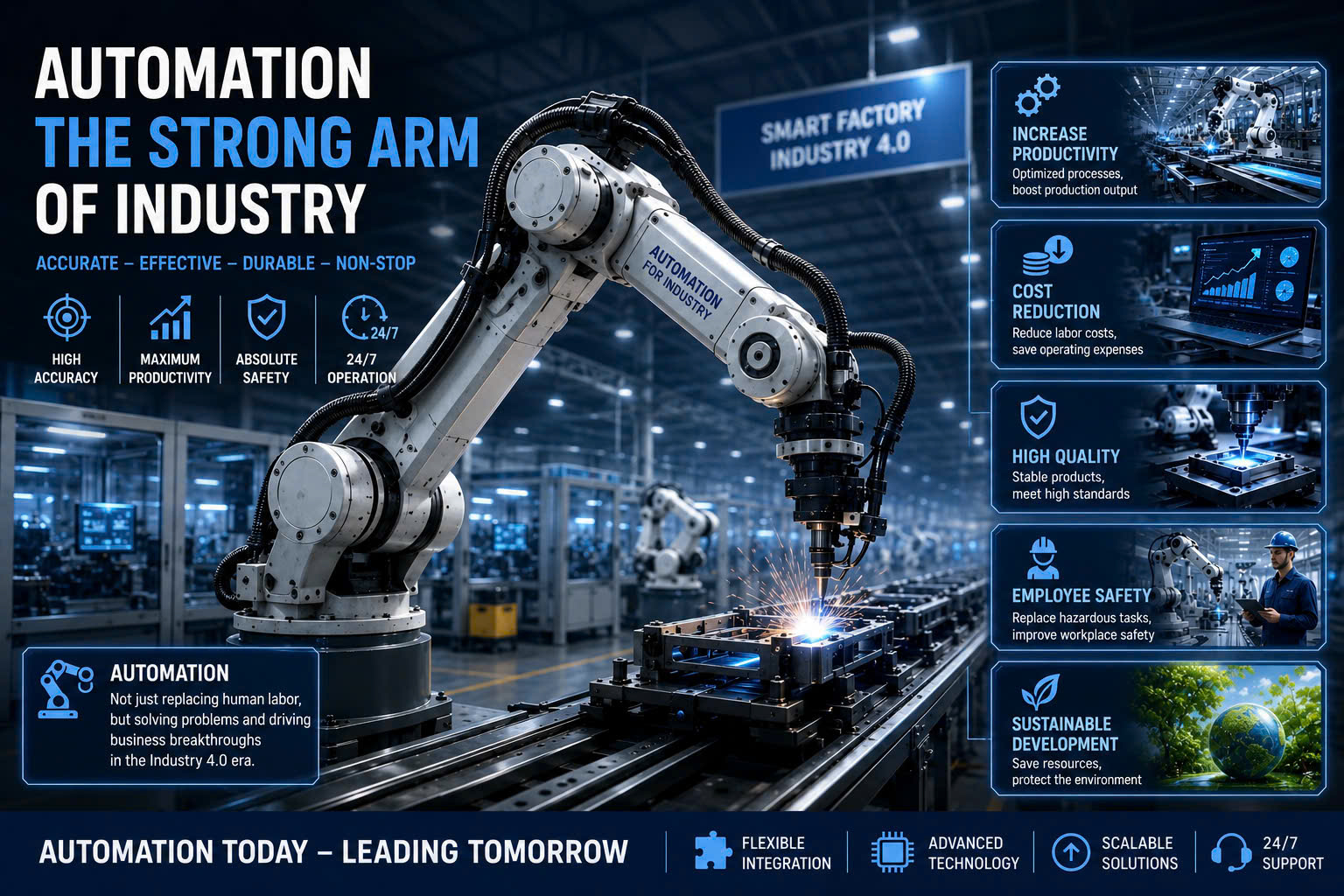
Automated production lines are the foundation of smart manufacturing and digital transformation. By integrating intelligent automation, robotics, IoT, AI, and data-driven decision-making, manufacturers can achieve higher productivity, superior product quality, lower operating costs, and greater operational flexibility.
As Industry 4.0 continues to reshape global manufacturing, investing in automation is no longer optional—it is a strategic necessity for companies aiming to remain competitive and achieve sustainable growth.

