
Our products
NEWS
Automation – The Powerful Arm of Modern Industry
Automation – The Powerful Arm of Modern Industry
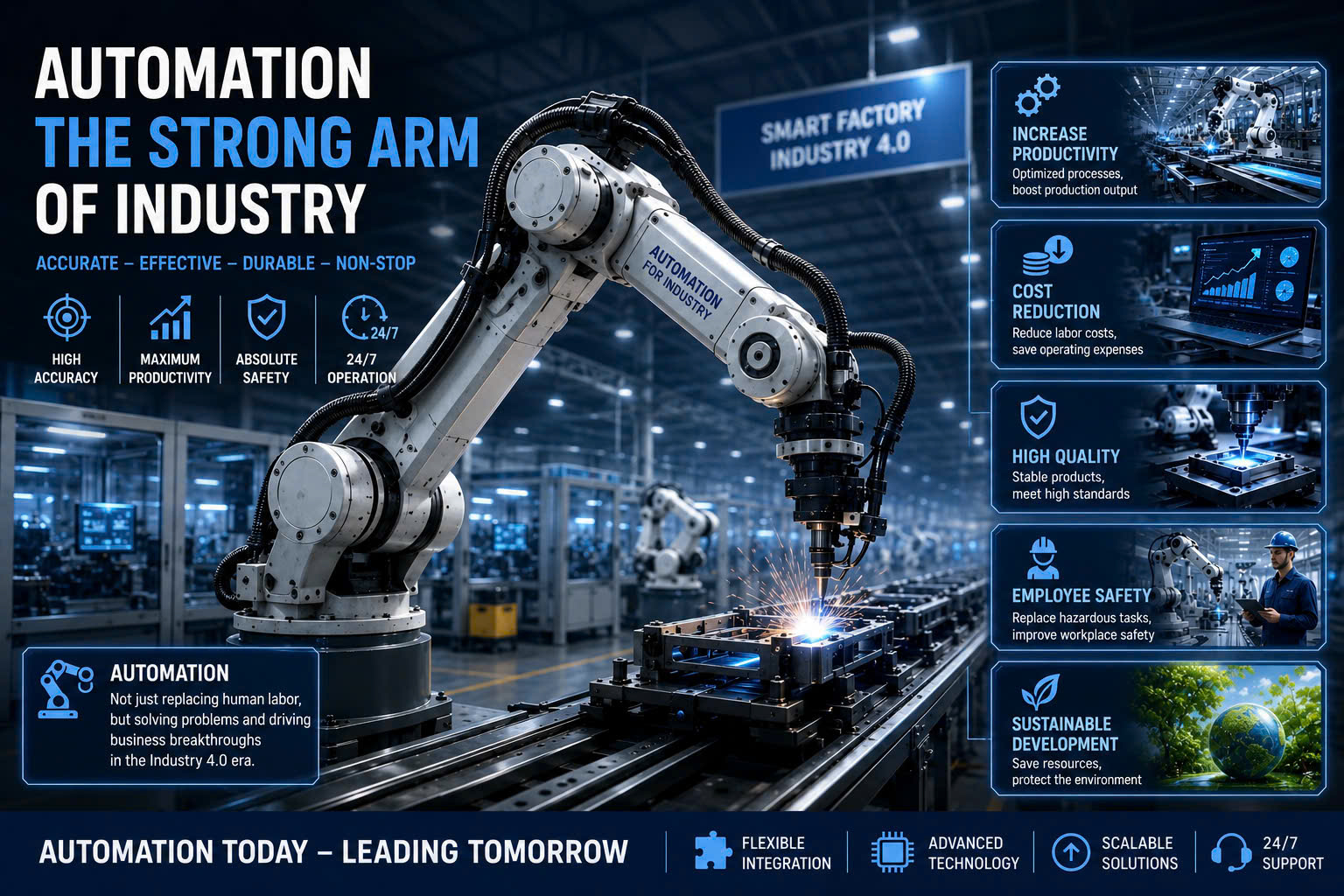
The phrase "Automation – The Powerful Arm of Modern Industry" perfectly reflects the essential role of automation in today's manufacturing environment. Machines are no longer just tools—they have become reliable partners that take on the most demanding tasks, allowing people to focus on higher-value work.
Below are three key ways automation serves as the industry's most valuable helping hand.
1. Taking Over Physically Demanding Work
Handling Heavy-Duty Operations
Automation systems replace manual labor in lifting and transporting heavy materials, such as magnetic assemblies or precision mechanical components weighing over 25 kg. They can operate continuously 24/7 without fatigue, ensuring stable productivity.
Operating in Hazardous Environments
Industrial robots and automated equipment perform tasks in hazardous workplaces, including welding stations, chemical painting processes, and high-temperature foundries, significantly reducing workers' exposure to health and safety risks.
Reliable Around-the-Clock Performance
Unlike manual labor, automated systems maintain consistent productivity during overnight shifts and continuous production, eliminating errors caused by fatigue.
2. Delivering Exceptional Precision
Micron-Level Accuracy
In CNC machining, electronic assembly, and jig positioning, automation systems work together with sensors and machine vision technology to achieve extremely high precision, helping manufacturers reduce defects to nearly zero.
Perfect Repeatability
Automation can repeat the same operation millions of times with identical speed, positioning, and force, ensuring consistent quality across every product leaving the production line.
3. Optimizing Production Flow and Factory Management
Intelligent Material Feeding
Automated feeding systems, integrated with custom jigs, long-part feeding mechanisms, and conveyor systems, continuously supply workpieces to production equipment, minimizing downtime and maximizing production efficiency.
Digital Manufacturing Intelligence
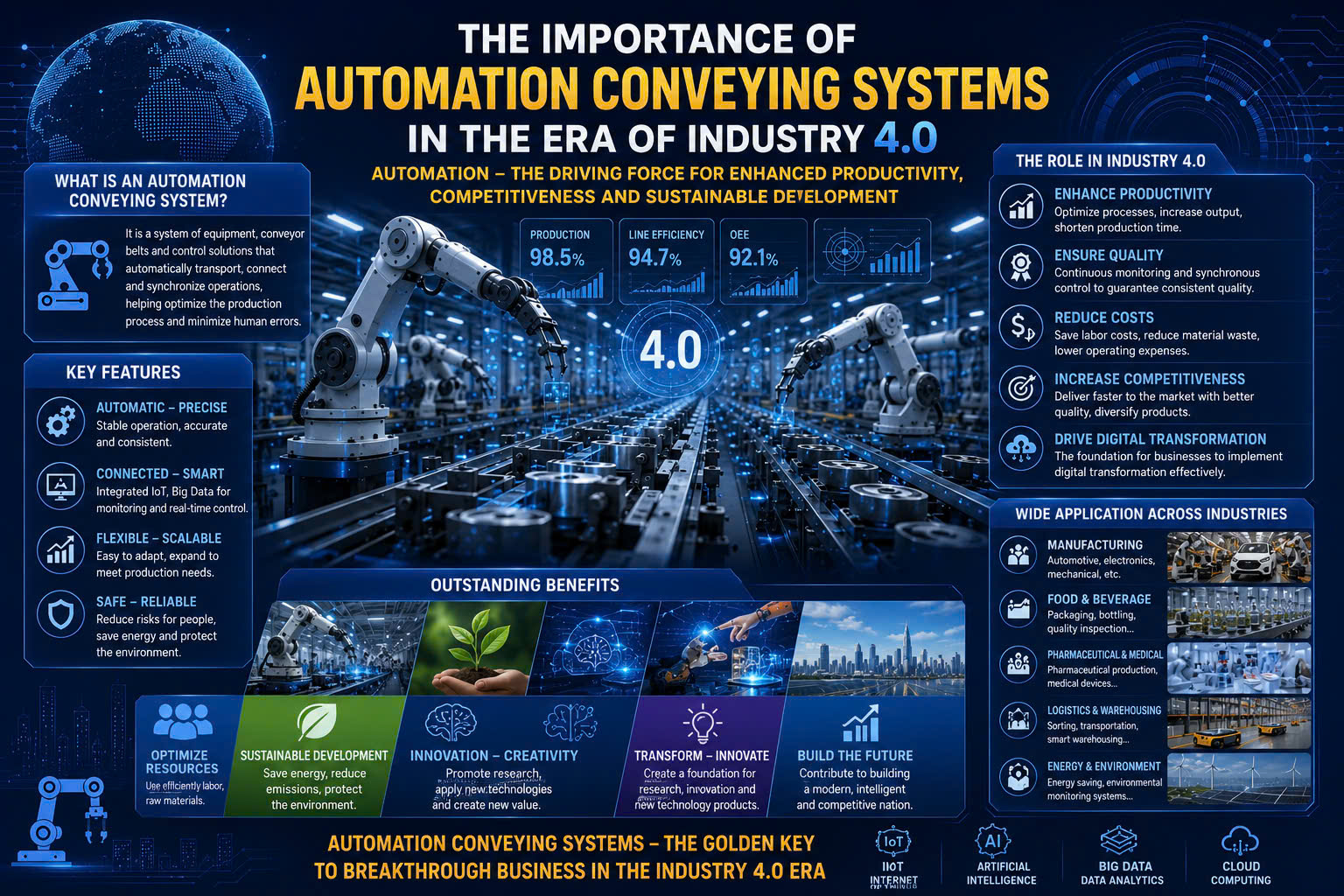
Automation enables manufacturers to monitor and manage production in real time through digital dashboards and automated reports. Key performance indicators such as production output, Overall Equipment Effectiveness (OEE), and machine status can be tracked continuously, allowing faster decision-making and predictive maintenance.
Automation is no longer simply a means of replacing manual labor. It has become a strategic asset that enables manufacturers to improve productivity, enhance product quality, optimize operational costs, and strengthen their competitiveness in the era of smart manufacturing.

